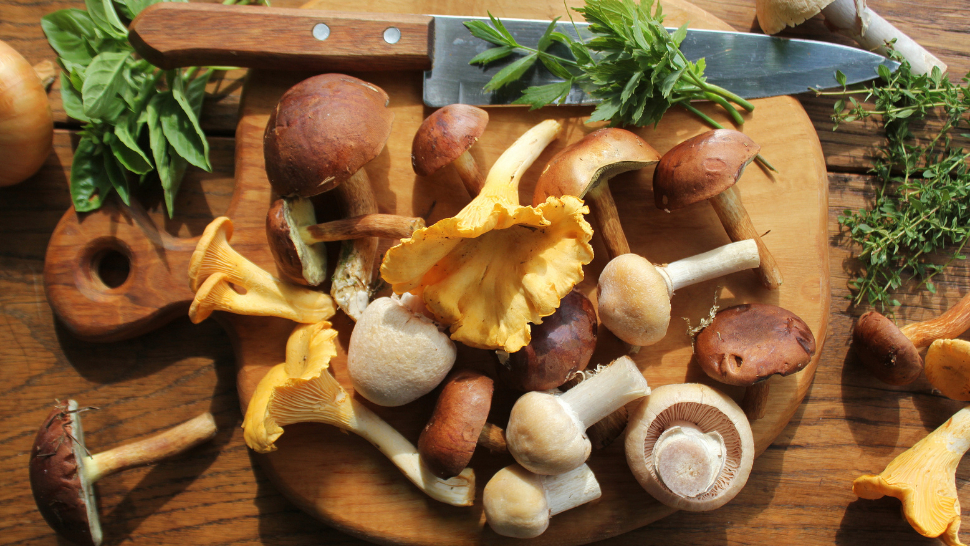
Move over pumpkin spice — this fall it’s mushrooms that are popping up everywhere. With their earthy flavor, meaty texture, and versatility across cuisines, mushrooms are the MVPs of cooler-weather cooking. But these fungi are more than just autumn’s answer to umami cravings, they are full of nutrients and eco-friendly.
So, grab your favorite flannel and find out three reasons why mushrooms are this season’s must-eat morsels.
- Health Highlight: Mushrooms are technically fungi, not plants, but they’ve long earned a place on our plates. Edible varieties like button, cremini, shiitake, and portobello offer more than just umami depth, they’re packed with nutrition. Mushrooms have high water content to support hydration and are sources of B vitamins, selenium, potassium, and phosphorus. Bonus: They’re one of the only non-animal sources of vitamin D when exposed to sunlight or UV light during growing; making them a smart choice for the sun-deprived autumn months.
- Umami Explosion: Craving something hearty, savory, and soul-warming as the days get shorter? Mushrooms deliver. Their deep, savory taste, known as umami, makes them the perfect plant-based swap for meat, flavor wise! Portobello caps grilled and stacked like burgers? Check. Sautéed shiitakes adding depth to risottos and soups? Absolutely. Even humble button mushrooms can elevate pasta or stew when given a good sear. Try these cozy fall combos: – Roasted mushroom and barley soup: Chewy grains and rich broth are a perfect fall match. – Stuffed cremini caps: Fill them with breadcrumbs, cheese, and herbs for an easy appetizer that vanishes fast. – Wild mushroom galette: It’s pie season, after all; savory counts too. Want even more bang for your buck? Blend chopped mushrooms with ground meat in burgers or meatballs. You’ll reduce saturated fat, increase fiber, and boost flavor — all while cutting your carbon footprint.
- A Sustainable Star: Mushrooms are sustainability superstars. They grow quickly, require minimal space, and sip less water compared to thirsty crops or livestock. According to the Mushroom Council, producing one pound of mushrooms requires just 1.8 gallons of water and generates less than 0.7 pounds of CO₂ equivalents, making them one of the lowest-impact foods on the market.
They also grow on agricultural byproducts (like corncobs or sawdust), turning waste into wonder. This goes beyond farm-to-table; it’s intentional from the ground up.
By adding more mushrooms to your plate, you’re not only doing your body good — you’re helping the planet, too.
Choosing your ‘shrooms – fresh, fancy, or foraged?
From the supermarket to the farmer’s market, fall is a great time to explore the mushroom multiverse:
White button: Mild and familiar, great for picky eaters.
– Cremini (baby bella): Slightly bolder, perfect for roasting or stuffing.
– Portobello: Meaty and grill-worthy.
– Shiitake: Earthy with a chewy bite, ideal in stir-fries and soup.
– Oyster: Delicate, pretty, and fast-cooking.
– Chanterelle: Wild, golden, and totally swoon-worthy in butter or cream sauces.
Before your channel your inner forest forager, a word of caution: not all mushrooms are meant for your risotto. The woods are full of fascinating fungi and a few that are more fatal than flavorful. Unless you are shopping from a trusted source, keep your ‘shroom hunting to the produce aisle.
Tip: Store fresh mushrooms in a paper bag in the fridge to keep them dry and extend their life. Wash them gently just before cooking.
Mushrooms for all.
Whether you’re vegetarian, flexitarian, or just mushroom-curious, these flavorful fungi offer something for everyone. They’re cozy, comforting, fall-ready, and perfect for layering into everything from casseroles to crostini.
The next time you’re grocery shopping or planning your fall menu, give mushrooms the star role that they deserve. They’re good for your health, great for your taste buds, and a gift to the environment. What more could you ask for in a humble toadstool?