We are grateful for the chance to partner with and learn from Alana Yazzie in celebration of Native American Heritage Month, creator of The Fancy Navajo and author of her first cookbook, The Modern Navajo Kitchen. Enjoy this in-depth Q&A with Alana to learn more about her approach to educating herself and others through traditional dishes with a modern twist.
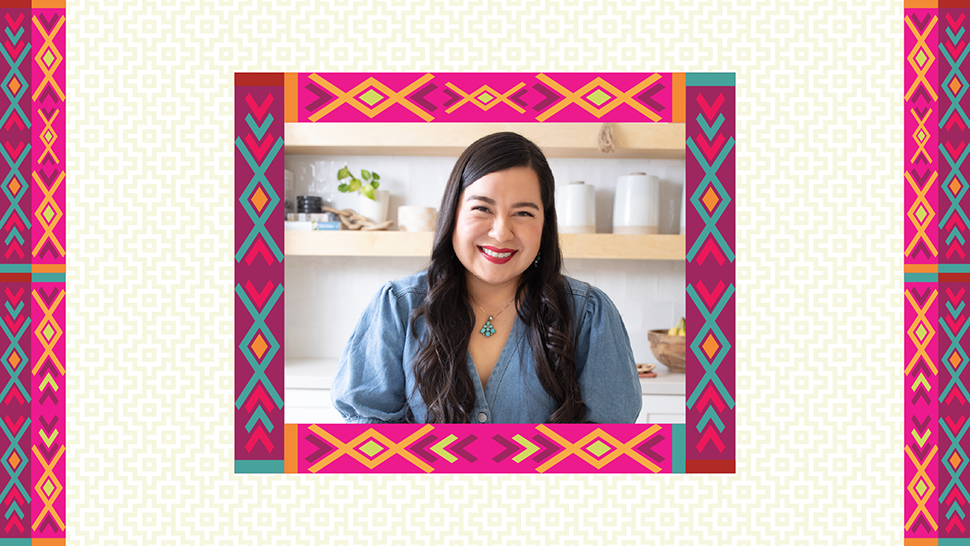
Tell us about yourself! How did your upbringing influence your love of food, and at what point did you decide to start creating and sharing recipes on The Fancy Navajo?
Yá’át’ééh (Hello), everyone! My name is Alana Yazzie, I am the creator of The Fancy Navajo, a lifestyle and food blog that I created in 2014, that follows along my life as a contemporary Diné (Navajo) woman living in the city (Phoenix, AZ). Not only do I share on my website, TheFancyNavajo.com, but I also share on social media as a content creator @TheFancyNavajo on Instagram, Facebook, and TikTok. I am also a cookbook author — I published my first cookbook, The Modern Navajo Kitchen, last October in 2024.
Cooking and food has always been a big part of my life. Ever since I was young, I’ve always enjoyed being in the kitchen with my mom and older brother. I’d pull up the kitchen chair next to them as they happily let me join them. My mom taught me how to cook, while my brother showed me how to bake.
However, my interest in Navajo and Indigenous foods didn’t begin until I went off to college at Marquette University in Milwaukee, WI. Having come from the Southwest (northwestern New Mexico) to the Midwest, it was a bit of a culture and temperature shock. For some of my peers, I was the first Native American they had ever met, which was so baffling! They had a lot of questions and misconceptions about Navajo and Native American culture. They asked if I ate salmon or wild rice, or if I lived in teepee which isn’t part of Navajo culture or geographically reasonable for where the Navajo Nation is located. I had to educate my peers about Navajo culture and through those conversations, I started to realize I had so much more to learn about my own culture and Navajo foods. So, each time I went home, I learned how to make a new Navajo dish like traditional Navajo Blue Corn Mush, Navajo Steamed Corn Stew, and more modern dishes like Navajo Tacos and Roast Mutton Sandwiches.
After settling into my adult career, I wanted to shift gears from human resources to marketing, but didn’t have much experience. At the time social media and blogs were still very new. I fell in love with Instagram and began to learn about social media marketing in hopes of landing a job in marketing. What I didn’t expect was to start a following as more people became interested in my “fancy” Navajo lifestyle which showcased Native American businesses, fashion, travel, gardening, and foods. They began to ask for more detailed content, specifically recipes. In 2014, I started my blog (TheFancyNavajo.com) as a way to share more recipes that focus on modern and contemporary-style Navajo recipes. After learning about traditional Navajo cuisine in college, I noticed there weren’t many modern recipes and began experimenting with new ways to use traditional Navajo ingredients like cornmeal, ground sumac berries, and green thread tea in modern recipes. Some of my most popular recipes are for Fancy Blue Corn Cupcakes, Navajo Boba Milk Tea, and Fancy Navajo Magic Bread. People appreciated these recipes because most recipes are passed along orally, so my website serves as a resource for those who want to learn more about Navajo foods.
How do you approach adapting traditional Navajo recipes? What sorts of things do you consider when modernizing dishes passed through generations while leaving room for creativity?
When it comes to my recipes, my goal is to always make the food approachable and easy to make. I am not a trained chef, but rather a home cook. So, I try to make recipes that I would make in my own kitchen. That’s important to me, because I want people to actually make these recipes, not just save them for a special occasion.
Indigenous foods are actually quite prominent in our everyday cuisine and even as a Native American, I am still learning about Indigenous foods outside the Southwest. So, a lot of the times I am simply asking myself “How can I add a ‘Fancy Navajo’ flair to this? What Indigenous ingredients can we add that makes the most sense? What is in season or why are there only a few recipes with this ingredient?”— all while being respectful to the ingredients. If it’s ever a concern, I have conversations with my parents or elders to get their opinions.
It’s a very cyclical process because it opens the room for more discussion about Navajo foods and recipes that are no longer made and finding ways to revitalize those foods. Then it’s on to the test kitchen to see if it will work. Sometimes it does, and sometimes it doesn’t. This type of cooking is pretty representative of the style of cooking of my Diné ancestors, who were seminomadic. It’s continuous learning and adapting with your surroundings.
What I found that works is finding simple and easy ways to incorporate Navajo or Indigenous ingredients into everyday foods like breads, drinks, or desserts. Most people are willing to try these types of recipes first as they work their way to trying more main dishes. My forte is in desserts and one of my favorite Indigenous ingredients is roasted cornmeal. In my culture we use three varieties, blue, yellow, and white cornmeal. Some of my favorite dessert recipes are for Blue Corn Strawberry Shortcakes and Sumac Berry Sugar Cookies. (You can find the recipe for Sumac Berry Sugar Cookies here!)
Your first cookbook, The Modern Navajo Kitchen, came out last October. Talk us through the process of writing the book.
I never imagined I would be a cookbook author, and I still pinch myself to make sure it’s real. When it comes to books about Native Americans, they are often written by non-Natives or retold from a Native perspective. So, to have an opportunity to write and photograph my own cookbook was a total dream come true. My Fancy Navajo community had been asking for a physical cookbook for years. So, when I was approached by my publishers, it was like the stars aligned! Once we worked out all the details it took over a year and a half to put everything together, from recipe creation to recipe testing, writing, and photographing the book. It was an all-encompassing project that I’m very proud of.
At the time, I was a newish mom to a 2-year-old toddler and was working during nap times or at night when everyone was asleep. I had to utilize my time wisely. Thankfully I had a wonderful editing team who taught me how to improve my recipe writing. I joke now, wondering how anyone was able to follow my blog recipes prior to the cookbook. I am glad my editing teams were so detailed in their editing style, because that aligned with my goal of making sure these recipes are approachable and easy to make. The book has a good balance of modern and traditional recipes which was important for me to showcase in the cookbook, and it reflects my brand, The Fancy Navajo. My favorite part was being able to photograph and style all the food photography in the book. But that was probably the hardest three weeks of the process, cooking and photographing all 50 recipes in the book. When I got the first copy, I was happy with how it came out— it’s gorgeous!
When it came to the release and promotion of my cookbook, I am so thankful to all my media contacts. They had been following my work with The Fancy Navajo for over a decade and were excited to share the news of my cookbook. We were featured in a variety of local magazines, newspapers, and news stations throughout the Southwest. It was really exciting, and I even had a little book tour where I was able to discuss and demonstrate some of the recipes from the book. The bulk of my work these days is going out into the community to teach cooking classes, which has been a fun addition to the work that I do.
What do you hope your readers and followers learn about Diné or Navajo culture through your work?
I hope they’ll learn a new perspective of Diné culture. A lot of times in mainstream media, Navajo culture is misrepresented or only the drab sides are shown. However, we are a very bright and thriving culture which is what I like to showcase through The Fancy Navajo. Through my cookbook, you’ll learn that modern Navajo cuisine is simple yet full of flavor. The Navajos are resourceful and inventive in our cooking methods and how we use our traditional ingredients. A lot of the recipes come from foods that we have grown over centuries. These recipes also stem from resiliency and perseverance. Navajo people have persevered and have started to reclaim our Indigenous foodways by incorporating both modern and traditional cuisines.
My goal is to inspire others to embrace their culture no matter where they live. I also encourage everyone to learn more about Navajo culture, but most importantly about your local Native American tribes in the area you live in. It’s important to learn which native lands you live on and acknowledge the original inhabitants and stewards of the land. This is a great resource to find this information. Then I would learn about your local tribes’ foods and traditions, and to support their local Indigenous foods producers when buying ingredients for these recipes. A lot of these food producers have online stores, and this is a great resource for finding Native food producers. The recipe I shared for Three Sisters Stew is a great dish to make that you can adapt to your local Native lands. I like to pair it with Frybread or Blue Cornbread, which are both recipes in my cookbook. To make the spread even more fancy you can also have it with Blue Corn Cupcakes.
Where can our readers find out more about you and your work? And where can they purchase The Modern Navajo Kitchen?
You can visit my website, TheFancyNavajo.com or follow me on any of my socials. Instagram @TheFancyNavajo, Facebook @TheFancyNavajoBlog, or TikTok @TheFancyNavajo. The Modern Navajo Kitchen is available for purchase wherever books are sold such as Barnes & Noble, Amazon (Kindle version available), Bookshop.org, and even your local bookstore may have it. If they don’t, ask them to carry it!