Hispanic Heritage Month is a time to honor culture, community, and the many ways food brings people together. In this roundup of sweet recipes from Buen Provecho, we are sharing a selection of delicious desserts contributed by our Bon Appétit team members.
This collection features a silky coconut tembleque from Puerto Rico, a cozy corn-based atole from Chile, and golden plantain empanadas from El Salvador. Whether you’re revisiting familiar flavors or trying something new, these desserts are sure to add warmth and comfort to your table. After you’re done with dessert, check out our roundup of savory dishes, and be sure to explore the full Buen Provecho cookbook to celebrate and honor Hispanic Heritage Month through food.
Puerto Rican Tembleque by Rosa Miranda Pichardo
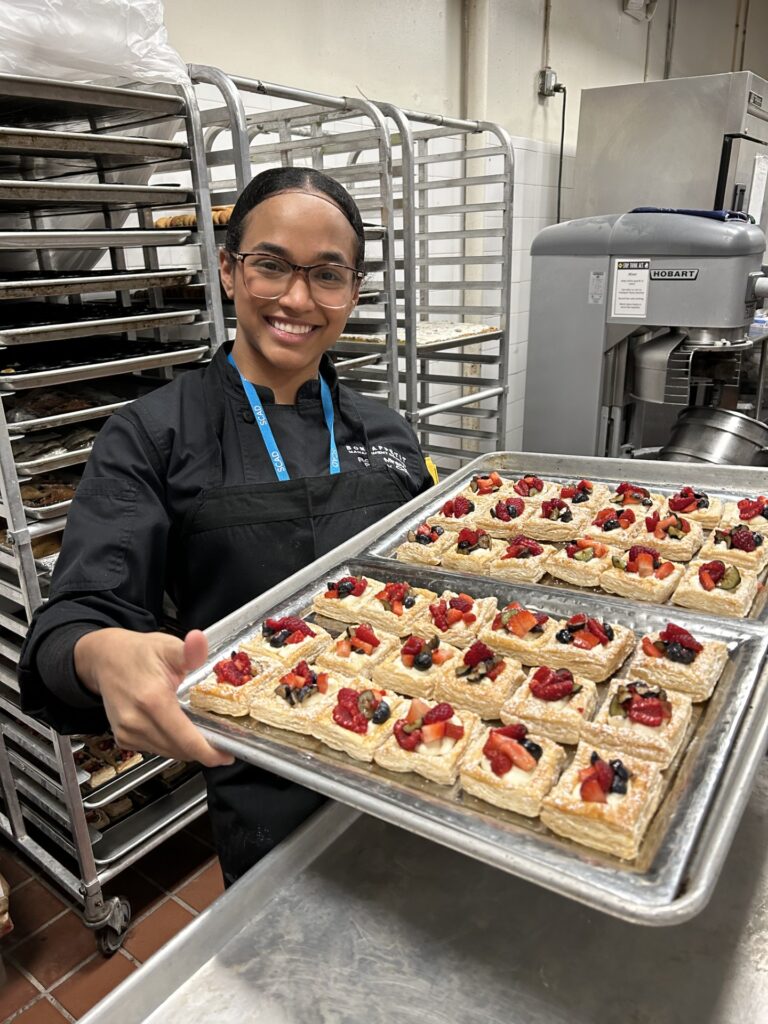
For Rosa Miranda Pichardo, tembleque is more than a dish served during Christmas celebrations— “it symbolizes joy, community, and cultural tradition.” She first learned to make it at age 14 and has continued the tradition every holiday season— “It is a way to keep my cultural roots alive and to express an important part of my personal story through cooking.”
- 14 ounces coconut milk
- 3/4 cup sugar
- 1/4 teaspoon salt
- 1/2 cup cornstarch
- Pinch of ground cinnamon, for garnish
In a saucepan, combine coconut milk, sugar, and salt.
Spoon 3 to 4 tablespoons of the coconut milk mixture into a small bowl and stir in the cornstarch until fully dissolved. Pour the cornstarch mixture back into the saucepan and stir to combine.
Bring the mixture to a boil over medium heat, stirring constantly, and cook until smooth and thickened, about 5 minutes.
Pour the mixture into individual molds. Cover each with plastic wrap and refrigerate until cold and firm, 3 hours to 2 days.
To serve, run a thin knife around the edges of each mold and invert onto serving plates. Garnish with a pinch of cinnamon.
Atol de Elote by Victor Moraga

Victor was inspired to make this Chilean atole recipe to teach students about the cultural and culinary significance of corn in Hispanic cuisine while sharing a warm and comforting treat. His passion for cooking Chilean food began in childhood and is fueled by a fascination with how diverse cultures intersect through flavors and tradition.
- 5 cups whole milk, preferably organic
- 2-1/2 cups yellow corn, preferably organic
- 1 stick cinnamon
- 4-1/2 tablespoons sugar
- 1 teaspoon kosher salt
- 1 tablespoon vanilla extract
- 5 tablespoons cornstarch, preferably organic
- 1 cup water
Fill a large bowl with ice and cold water. Bring a large pot of water to a boil. Add the corn and cook uncovered until the kernels are slightly softened, about 8 to 10 minutes. Drain the corn in a colander and immediately transfer to the ice water to stop the cooking process. Let sit for several minutes, then drain again.
Remove the kernels from the cob using a knife and transfer to a blender. Add 1 cup of water, or 1/2 cup if blending in batches, and blend until puréed. Strain the mixture into a bowl using a fine-mesh strainer and discard the solids. Run the liquid through a clean strainer once more.
Stir in the milk and transfer the mixture to a medium nonstick skillet. Cook over medium heat until the milk is heated through. Stir in the sugar, vanilla extract, and salt, and bring to a gentle simmer.
Reduce the heat to low. In a small bowl, combine 1/4 cup of the hot liquid with the cornstarch and whisk until smooth. Pour the cornstarch mixture into the skillet and stir constantly until the atole begins to thicken to the desired consistency, about 5 minutes. Immediately remove from heat and pour into pudding bowls, soup bowls, or cups.
Salvadoran Plantain Empanadas by Sindy Dominguez

This recipe is a tribute to Sindy Dominguez’s grandmother, whose warmth and culinary wisdom live on through the comforting flavors of these Salvadoran empanadas. Sindy shares that they are “a reminder of my grandmother’s love, and a way to keep her close through the flavors and aromas of her cooking even though she is far away.” Made with mashed ripe plantains and filled with either sweet custard or savory refried beans, these golden, lightly crisp treats are a nostalgic favorite perfect for breakfast or an afternoon snack.
For the dough
- 4 to 5 very ripe plantains (with black skins)
- 1 teaspoon ground cinnamon (optional)
- 1 teaspoon sugar (optional, if plantains are not sweet enough)
- Oil, for frying
For the filling (choose one)
Option 1: Sweet Custard (Leche Poleada)
- 2 cups milk
- 1/4 cup sugar
- 2 tablespoons cornstarch
- 1 teaspoon vanilla extract
- Pinch of salt
Option 2: Refried Beans
- 1 cup thick refried beans (black or red beans, mashed and cooked)
Prepare the dough: Peel and cut the ripe plantains into large chunks. Boil in water for 15 to 20 minutes until very soft. Drain and mash into a thick, smooth purée using a fork or food processor. Add cinnamon and sugar, if desired. Let the dough cool completely before handling.
Make the filling (custard): In a saucepan, combine the milk, sugar, cornstarch, vanilla extract, and salt. Cook over medium heat, stirring constantly, until the mixture thickens to a pudding-like consistency. Let cool before using.
Assemble the empanadas: Grease your hands with oil. Take a portion of plantain dough and flatten it into a thick disc. Place a spoonful of filling in the center. Gently fold and seal the edges to form an empanada.
Fry: Heat oil in a pan over medium-high heat. Fry each empanada until golden brown on both sides. Transfer to paper towels to absorb excess oil.
Serve: Sprinkle with sugar if desired. Best enjoyed warm, with coffee or atoll (a traditional hot corn drink).