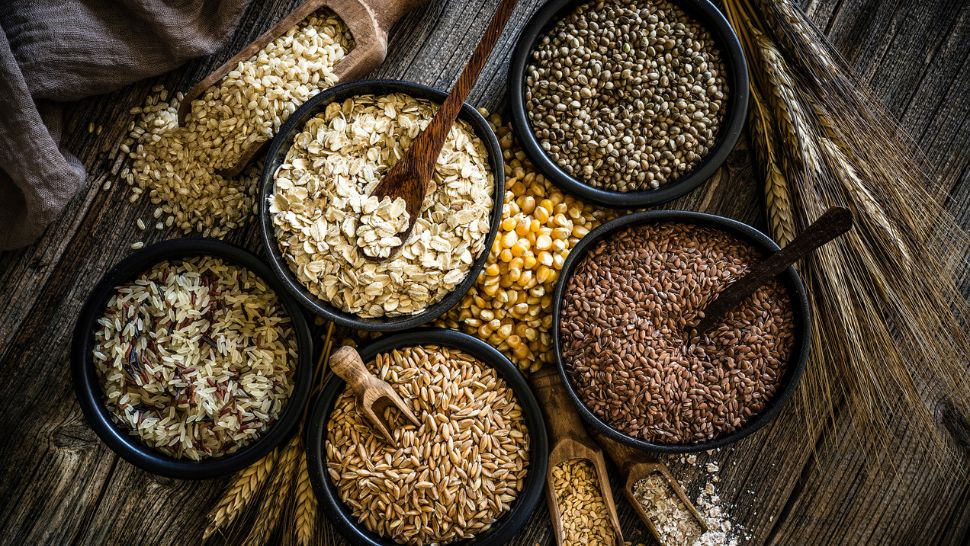
Over the years, grains have been a controversial topic of discussion in many books and food blogs. While it may seem like grains are the cause of all health problems, remember that for most people whole grains are part of a healthy diet. Concerns typically arise when daily meals are rich in refined grains (white breads/pasta, cookies, cakes, and pastries) that increase the risk for cardiovascular disease, diabetes, cancer, and other health conditions. Research shows that eating more whole grains can lessen your risk for these diseases. In addition, whole grains contribute fiber, B vitamins, iron, magnesium, and phytonutrients – beneficial plant compounds. Plus, they provide a plant-based source of protein!
If you don’t regularly eat whole grains, try swapping some of the grains on your plate for whole grain options. While whole wheat breads and pastas are typically popular choices, you can also include intact whole grains like quinoa, spelt berries, and even popcorn! If you’ve never tried some of these whole grains, fear not. We have tested a few recipes below, and with a little creativity the options are endless.
5 ways to make whole grains a regular part of your meals:
- Start your day with whole grains. Consider traditional breakfast options such as oatmeal, muesli, and congee or get creative and try swapping in quinoa, whole grain rice, or other high-fiber grains. Here’s a savory option for dandelion and cheddar porridge, but you can also try it with other grains like farro or cracked buckwheat.
- Pair your protein with a twist on the traditional with this spelt berry tabbouleh.
- Snack on homemade popcorn — yes, it’s a whole grain! Skip the butter and flavor it with herbs and spices like this smoked paprika and nutritional yeast popcorn.
- Blend them with beans to make a healthy, protein packed burger like this black bean and bulgur burger.
- Don’t forget dessert! Use whole grain flours and substitute up to 50% of the all-purpose flour with white whole wheat flour for additional fiber and nutrients in baked goods or give these tahini quinoa cookies a try.
Including whole grains on your plate can help fill you up and keep you energized until your next meal. Aim for about 1/4 of your plate to be whole grains.
Not sure how to cook with whole grains? Use this guide for grain to water ratios and cooking times. Most cooked grains stay fresh in your refrigerator for up to 5 days (or can be frozen once cooked for up to 3 months), so make a batch on the weekend for easy access during the week or beyond!
| 1 cup whole grain | Cups of water | Bring to boil, then reduce heat and simmer
(in minutes) |
| Amaranth | 2 | 15-20 |
| Barley, hulled* | 3 | 30-45 |
| Buckwheat | 2 | 20 |
| Bulgur* | 2 | 15 (covered, heat off) |
| Cornmeal (polenta) | 3 | 15-20 |
| Couscous, whole wheat* | 2 | 5 (covered, heat off) |
| Farro* | 2.5 | 20-25 |
| Kamut® | 4 | Soak overnight, cook for 45 |
| Millet | 2 | 20-30 |
| Oats, steel-cut | 4 | 20 |
| Pasta, whole wheat* | 6 | 8-12, drain |
| Quinoa | 2 | 10-15 |
| Rice, brown (various) | 2.5 | 25-45 |
| Rye Berries* | 4 | Soak overnight, cook for 45-60 |
| Sorghum | 4 | 25-40 |
| Spelt Berries* | 4 | Soak overnight, cook for 35-45 |
| Teff* | 4 | 15-20 |
| Triticale Berries* | 3 | Soak overnight, cook for 40-50 |
| Wheat Berries* | 4 | Soak overnight, cook for 45-60 |
| Wild Rice | 3 | 45-60 |
* Indicates grain contains more than 3g of fiber per 1/2 cup serving.
For the difference between sprouted and whole grains, read more here.