What’s the buzz?
Is collagen really the secret to glowing skin, strong joints, and a happy gut?
What does the science say?
Collagen is celebrated for everything from supposedly improving joint health and curing digestive problems to giving you firm, plump, glowing skin. But before you empty your wallet on the latest cure-all and start adding collagen powder to your morning smoothie or coffee routine, let’s take a look at what’s behind some of these claims.
Collagen is a major insoluble fibrous protein in connective tissue that makes up about 30% of the total protein in your body. It is the building block that provides structure for your skin, muscles, bones, tendons, and ligaments. In our bodies, collagen supports our internal organs and skin by connecting tissues and strengthening our tendons. Our bodies can make collagen naturally, and there are many nutrients that support collagen production which may help to lessen the effects of aging. Eating vitamin C-rich foods such as citrus fruits, broccoli, and Brussels sprouts is one way to aid production since vitamin C plays a major role in the synthesis of collagen. Zinc (found in many foods such as shellfish, beans, nuts, animal meats, and dairy) and also copper (found in foods such as shellfish, organ meats, sweet potatoes, tofu, and cocoa) can help boost collagen production too.
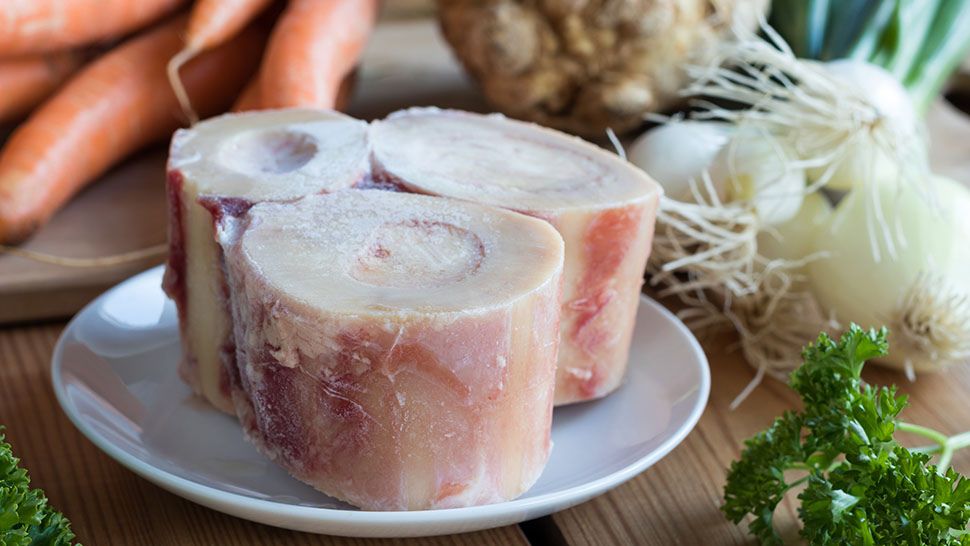
Outside of our own production, we can consume collagen by eating certain cuts of meat, specifically animal skin and tendons like beef chuck. Bone broth has also become a popular (albeit spendy) way to consume collagen, though benefits are not well supported by research.
As we age, our collagen production does slow down. This dip is partly why skin starts to wrinkle and joints start to creak and is the reason behind beauty and supplement companies adding collagen to products with claims that it will reduce the effects of aging. Some studies do suggest collagen may improve skin elasticity and hydration but further research is needed to determine the potential benefits and risks of oral collagen supplementation.
Part of collagen’s recent surge in popularity is also because preliminary research has shown it may improve gut health, specifically supporting intenstinal permiability and autoimmune issues. But, this is only preliminary research, which means it isn’t considered solid scientific evidence yet (and is often based on animal or in vitro studies, not human).
While collagen is an important protein for health, there is no research to suggest that low collagen production is a common health problem. It is also thought that oral collagen may be digested and broken down before it makes it to your cells, meaning it doesn’t reach your tissues as intact collagen. This coupled with the lack of research on the effectiveness of consuming outside sources of this protein means it likely has little benefit, if any at all. However, if you do choose to test out a collagen powder or supplement, do your research and consult with your doctor or registered dietitian as supplements are not well-regulated — and don’t expect any health miracle or for it to transform you into a glowing goddess overnight.
What’s the takeaway?
Bottom line? Collagen is important, but it’s not the magic elixir that it is sometimes made out to be. If you are eating nutrient-rich foods, your body likely already has what it needs to produce collagen naturally. You can skip the pricey powders and focus on the basics. Fill your plate with a variety of fruits and vegetables, eat quality proteins, make sure you are getting enough sleep, and don’t forget the sunscreen! Yes, sunscreen – nothing breaks down collagen faster than those UV rays.